Table of Contents
ToggleThe bedroom rug you choose sets the tone for your entire space, it’s the foundation that ties colors, textures, and furnishings together. Whether you’re starting from scratch or refreshing a tired floor, the right rug can transform a bedroom from bland to inviting in a single afternoon. The good news? You don’t need a professional designer or a massive budget to nail it. This guide walks through seven proven rug styles and practical strategies so you can pick one that fits your aesthetic, your lifestyle, and your space without overthinking it.
Key Takeaways
- Choose a bedroom rug in sizes like 5′ × 8′ or 6′ × 9′ placed under the bed with 2–3 feet of visible floor on each side to anchor the sleeping area and create a defined zone.
- Neutral bedroom rug ideas in cream, beige, and gray provide timeless elegance and let statement bedding, wall art, and accessories stand out without competing for attention.
- Bold patterned and colored rugs make a dramatic statement—just balance them with neutral walls and solid bedding to keep the space from feeling visually overwhelming.
- Plush and soft textured rugs feel luxurious underfoot but require weekly vacuuming with low-suction settings to prevent dust buildup and maintain their appearance.
- Layering a smaller patterned rug atop a larger neutral base rug creates visual depth, allows seasonal swaps, and solves sizing challenges without breaking the budget.
- Rotate your bedroom rug every 3–6 months, vacuum weekly, spot-clean spills immediately, and schedule professional cleaning every 12–18 months to maximize lifespan and hygiene.
Choosing the Right Size and Placement
Before you fall in love with a color or pattern, nail down the measurements. A rug that’s too small will make your bedroom feel choppy and ungrounded: one that’s too large wastes money and can crowd the space.
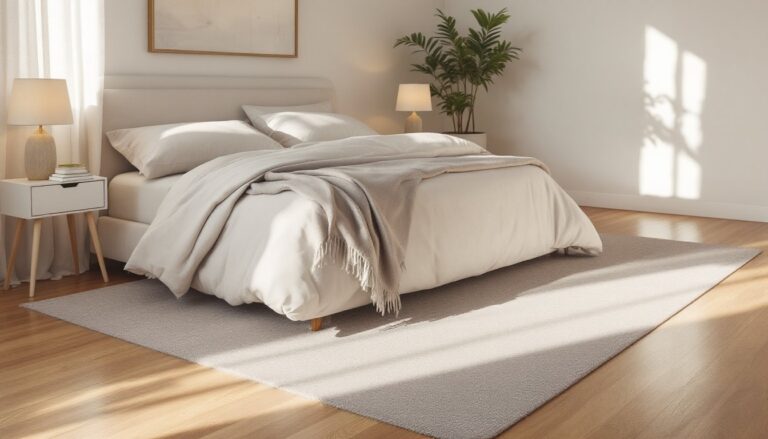
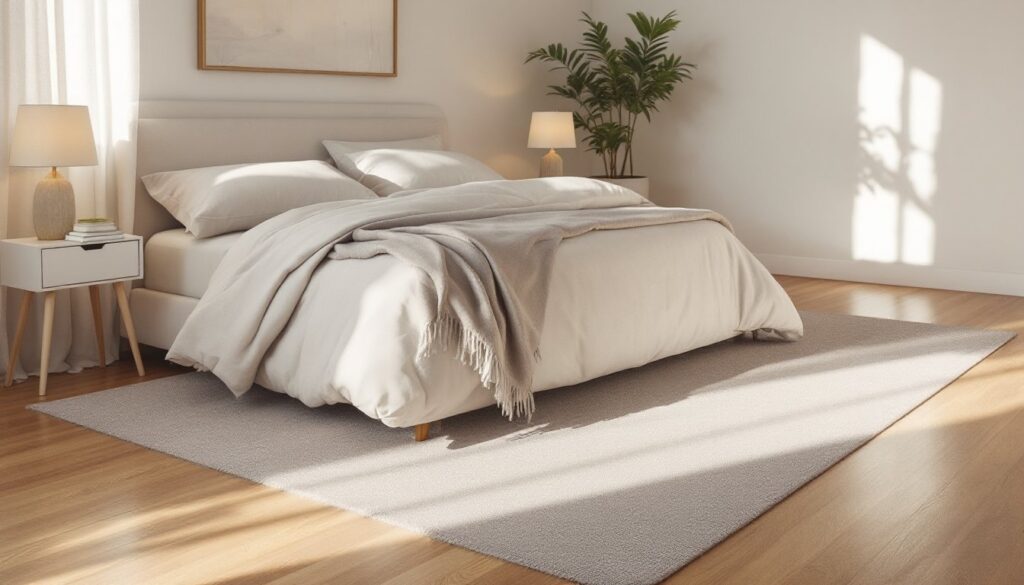
For most bedrooms, aim for a 5′ × 8′ or 6′ × 9′ rug placed under the bed with 2–3 feet of visible floor on either side. This arrangement anchors the sleeping area and creates a defined zone. If you have a smaller room, a 4′ × 6′ rug centered at the foot of the bed works fine. Larger master suites can handle 8′ × 10′ or 9′ × 12′ if you’ve got the square footage.
Measure your room lengthwise and widthwise before shopping, and don’t buy based on a photo alone, dimensions can trick the eye. Check the rug’s return policy: most online retailers allow 30 days if it doesn’t fit your space the way you imagined. Placement matters too: a rug under both nightstands and the foot of the bed creates a cohesive look, while a smaller runner at the foot is purely cosmetic and won’t affect how the room functions.
Classic Neutral Rugs for Timeless Elegance
Neutral rugs, think cream, beige, gray, and soft taupe, are the reliable workhorse of bedroom design. They won’t compete with bedding or wall colors, and they age gracefully without looking dated in a few years.
Natural fiber options like jute and sisal offer a woven, organic texture that feels warm underfoot and pairs well with modern or farmhouse aesthetics. Wool blends are durable and soften with age, making them ideal if you have kids or pets. If you prefer something more luxurious, neutral merino wool or synthetic microfiber rivals the softness of natural materials without the price tag.
A subtle pattern, like a herringbone weave or low-contrast geometric, adds visual depth without overwhelming the space. Layering a neutral rug under patterned bedding or colorful wall art allows those elements to pop while the rug stays understated. According to modern design trends showcased on interior design inspiration platforms, neutral foundations let statement furniture and accessories shine. If your bedroom style leans minimal or Scandinavian, this is your sweet spot.
Bold Patterns and Colors for Statement Impact
Ready to commit? A bold rug turns your bedroom into a conversation piece and anchors the entire color scheme. Jewel tones like emerald, sapphire, or deep burgundy feel luxurious, while geometric patterns add modern edge and hide dirt remarkably well.
Floral and medallion patterns work for traditional or eclectic rooms: they draw the eye and can tie together multiple accent colors in your bedding and décor. Large-scale patterns (think oversized paisley or abstract blocks) feel current and work especially well in rooms with 9-foot ceilings or more. For smaller bedrooms, go bold with color saturation rather than busy pattern density, a rich jewel-tone solid or subtle striped rug keeps the space from feeling cramped.
When committing to bold, balance is key: keep walls and larger furniture pieces neutral so the rug is the focal point. Pair a patterned rug with solid-colored bedding to avoid visual chaos. Check whether the rug’s dyes are colorfast (especially with darker shades) by testing a hidden corner with a damp white cloth. Bold rugs demand more upkeep, so choose stain-resistant synthetics if you have pets or young children. Design inspiration sites like Decoist showcase how adventurous homeowners use bold patterns to create personality-driven spaces.
Soft and Luxurious Textures for Comfort
Your feet hit the floor first thing in the morning and last thing at night, comfort matters. Plush rugs with deep pile (1.5–2 inches or more) feel incredible underfoot and are forgiving about footprints and vacuuming patterns.
Shag and plush synthetics offer that cloud-like softness without the maintenance headache of natural fibers. Microfiber blends are hypoallergenic, naturally stain-resistant, and hold up well to frequent cleaning. If budget allows, merino wool or a wool-viscose blend delivers luxury feel with better durability than pure microfiber alone. Faux fur and velvet-style rugs trend heavily for bedroom applications because they’re soft, warm, and emotionally soothing.
Keep texture in perspective: plush rugs trap dust and require more frequent vacuuming, so commit to a dedicated handheld or lightweight vacuum for weekly maintenance. Jute and sisal, while durable, can feel scratchy underfoot for barefoot bedrooms, reserve those for low-traffic zones. If you share the bed with someone who has allergies or asthma, avoid deep-pile naturals and opt for low-pile synthetics you can deep-clean quarterly.
Layering Rugs for Depth and Visual Interest
Layering, placing a smaller, patterned or colored rug atop a larger neutral one, is the secret move that makes a bedroom feel designed rather than decorated. The larger base rug anchors the space and defines the sleeping zone: the smaller accent rug adds personality without overwhelming the room.
A typical layering setup uses a 5′ × 8′ or 6′ × 9′ neutral wool rug as the base and a 3′ × 5′ or 4′ × 6′ patterned runner laid at an angle or straight on top. The offset creates visual interest and allows the base rug to frame the accent layer. You’ll see this technique in home design resources styled for modern and contemporary bedrooms constantly because it works: it’s flexible, it looks intentional, and it’s budget-friendly (you can swap the accent rug seasonally without replacing the whole foundation).
Mix contrasting textures, a smooth wool base with a shag or macramé-trimmed accent, or balance patterns smartly (geometric base + floral accent, for example). Layering also solves the size problem: if you can’t commit to one large rug, two smaller ones achieve a similar anchoring effect. Use a non-slip rug pad under both layers to prevent shifting and protect hardwood floors.
Maintenance Tips to Keep Your Bedroom Rug Looking New
A rug’s lifespan depends on what you do after you bring it home. Vacuum weekly with a low-suction setting or handheld vacuum to avoid bunching pile or damaging fibers. For natural fibers like jute, use a soft brush attachment rather than a powered beater bar, which can snag and fray edges.
Rotate your rug 180 degrees every 3–6 months to ensure even wear and sun fading. Bedroom foot traffic is usually light, so rotation isn’t as critical as in hallways, but it extends the rug’s life. Spot-clean spills immediately using a damp cloth and mild dish soap, blot, don’t rub, to avoid pushing stains deeper into fibers. For synthetic rugs, most stains respond well to standard carpet cleaner: test on a hidden corner first. Avoid steam cleaning natural fibers: professional dry cleaning is safer for delicate textures.
Professional cleaning every 12–18 months keeps the rug hygienic and refreshed, especially if you have allergies or pets. Use felt pads under furniture legs to prevent flattening and indentation. Keep the rug away from direct sunlight to prevent color fading, if your bedroom gets morning light, consider light-filtering curtains. Store off-season rugs in a cool, dry place wrapped in breathable fabric (never plastic, which traps moisture). A little preventive care keeps your bedroom rug looking fresh and extends its lifespan by years.
Conclusion
Your bedroom rug is an investment in comfort and style that deserves thoughtful selection. Whether you choose a classic neutral, a bold statement piece, or a layered combination, start with the right size, consider your lifestyle and maintenance capacity, and trust your instincts. A great rug doesn’t just cover the floor, it ties your room together and makes you want to kick off your shoes the moment you walk in. Take your time, measure twice, and you’ll land on something you’ll love for years.