Table of Contents
ToggleYour coffee table is more than just a surface for your remote, it’s one of the first things guests notice when they walk into your living room. A thoughtfully styled coffee table centerpiece can anchor the entire space, tie together your décor, and set the tone for the room’s personality. Whether you’re working with a sleek modern table, a rustic farmhouse piece, or something in between, the right centerpiece adds visual interest, texture, and intentional design without looking overdone. This guide walks you through practical strategies for styling coffee table centerpieces that work year-round, hands-on DIY projects you can build this weekend, and principles that help you style any table shape with confidence.
Key Takeaways
- A thoughtfully styled coffee table centerpiece anchors your living room, ties together your décor, and sets the room’s personality through intentional design.
- Balance negative space with visual elements—mix high-impact textures, materials, and heights while maintaining breathing room to avoid a cluttered or sterile look.
- Use the 60-30-10 principle: 60% visual weight from your largest element (books or plant), 30% from secondary objects (smaller vessels), and 10% from accents to create visual harmony.
- Coffee table centerpiece ideas work best when you rotate 40% of seasonal elements (flowers, ceramics, branches) while keeping 60% permanent fixtures year-round for a fresh, low-maintenance approach.
- Adapt your coffee table decor arrangement to your table’s shape—rectangular tables benefit from asymmetrical groupings, square tables from centered displays, and round tables from offset circular arrangements.
- DIY projects like wooden trays, painted terra cotta vessels, and terrariums give you affordable, personalized alternatives to store-bought décor that elevate the entire arrangement.
Why Coffee Table Decor Matters
Your coffee table occupies valuable real estate in the living room, it’s visible from every angle and sets expectations for how intentional your overall design is. A well-styled centerpiece does several things at once: it defines the table’s purpose, breaks up flat surface area, invites conversation, and prevents the table from looking cluttered or bare.
Unlike shelving or wall décor, coffee table styling is intimate. People sit closer to it, and the items you choose communicate taste and care. A generic vase with silk flowers doesn’t accomplish what a carefully curated arrangement of books, objects, and plants can. The goal isn’t to create a showroom display that can’t be touched, it’s to craft a focal point that feels natural in your home while still being visually complete.
Good coffee table centerpiece ideas balance negative space (empty surface) with visual elements. Too much clutter defeats the purpose: too little leaves the table looking unfinished. The best approach is intentional restraint: a few high-impact pieces arranged with breathing room around them.
Best Materials and Textures for Coffee Table Centerpieces
Layering different textures and materials is what separates a styled table from a sterile one. Think about mixing glossy and matte surfaces, natural and manufactured materials, and varying heights to create visual rhythm.
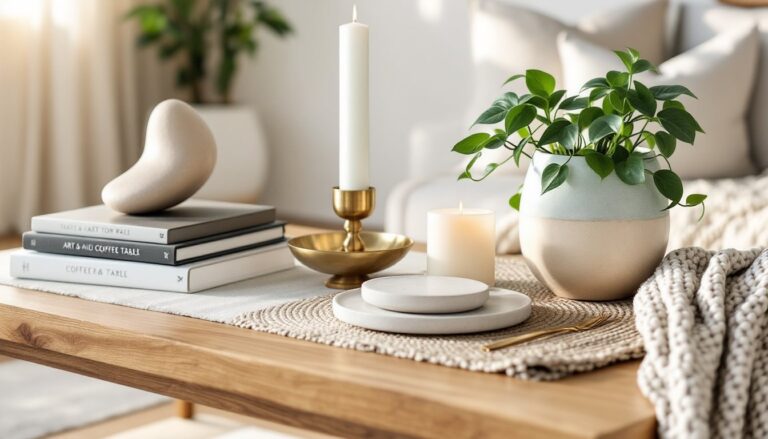
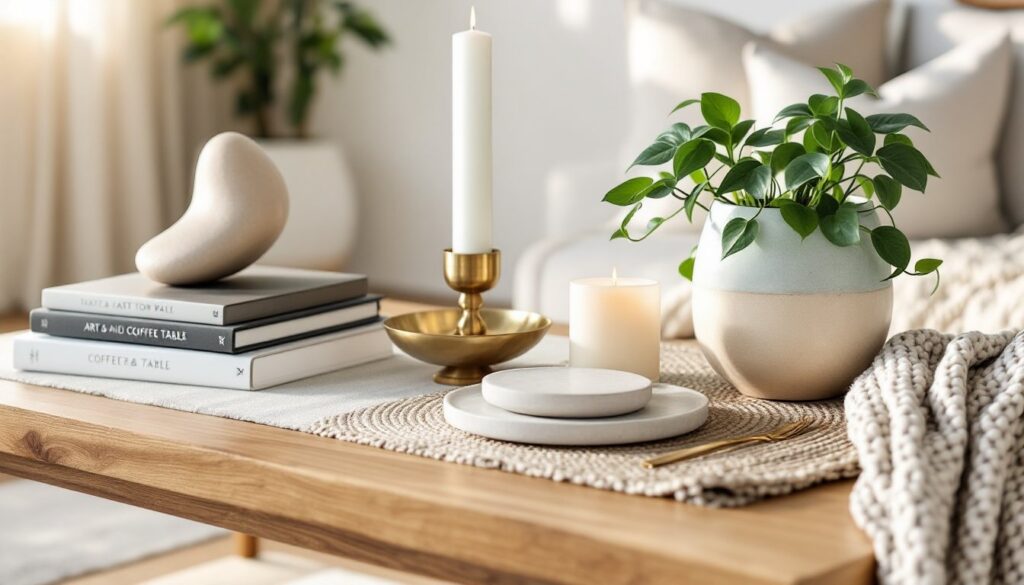
Natural wood and stone work well as foundational elements. A wooden box or wooden tray anchors a grouping and adds warmth. Stone coasters, a slate or marble slab, or natural stone spheres bring weight and visual grounding. Glass and brass catch light and add sophistication, a brass bowl, glass candle holders, or a brass-framed object draws the eye upward and prevents the arrangement from feeling too heavy.
Textiles like linen, cotton, or wool soften a table. A folded throw blanket (draped casually over one edge), a woven mat beneath objects, or a natural fiber placemat creates tactile interest. Ceramics and pottery in matte finishes add personality and handmade quality. A ceramic vase, a sculptural piece, or a simple pottery bowl works especially well if the piece has visible glaze variation or subtle color depth.
Plants and greenery remain essential. Live plants like trailing pothos, snake plants, or compact fiddle leaf figs add life and freshness. If live plants don’t suit your space, high-quality faux greenery (avoid plastic-looking varieties) provides the same softness without maintenance. The design principles for coffee table styling emphasize balancing geometry, height, and texture, principles that apply whether you’re working with real or faux botanicals.
Books and decorative objects serve as vertical anchors. Stack 2–3 coffee table books (art, travel, design, or photography) and lean a smaller object against them. A sculpture, a framed photo, or a decorative object adds personality and visual interest without requiring floor space.
Seasonal Centerpiece Ideas
Rotating your coffee table centerpiece seasonally keeps your living room feeling fresh without committing to a permanent setup. You don’t need to do a complete overhaul, swapping two or three elements is enough to shift the mood.
Spring calls for lighter, brighter pieces. Fresh flowers (tulips, peonies, or ranunculus), pastel-colored ceramics, and lighter-weight objects create an airy feel. Add a linen runner or light-colored fabric beneath your objects to echo the season’s freshness.
Summer is the time for bold colors and relaxed groupings. Bright ceramic vessels, shell collections, coral or sand-colored stones, and loose greenery work well. A low, wide arrangement prevents blocking sightlines and keeps the space feeling open.
Fall welcomes warmer tones and textural elements. Incorporate deep-orange or burnt-sienna ceramics, dried grasses, branches, or a low vase filled with wheat. Layering a wood tray beneath objects adds warmth and grounds the arrangement.
Winter invites cozy textures and candlelight. Groupings of pillar candles in varying heights (always check candle safety and keep away from draft sources), a pottery bowl filled with natural elements like cinnamon sticks or whole nuts, or evergreen clippings create a seasonally relevant display. A chunky knit or wool element adds tactile warmth.
The key is using 60% permanent fixtures (the table book stack, a key ceramic piece, or a plant) and rotating 40% of your elements with the season. This approach keeps styling manageable while preventing a stale appearance.
Styling Tips for Different Coffee Table Shapes
Coffee table shape dictates how you arrange elements. A misaligned centerpiece can throw off the entire visual balance, so understanding your table’s geometry helps.
Rectangular tables are the most common. Arrange objects asymmetrically along the length, rather than centering everything, group objects on one third of the table, leaving the remaining two-thirds open for function (drinks, remotes, feet). This feels more intentional and less formal. A long, low arrangement (books lying flat, a runner, a narrow wooden tray with grouped objects) respects the table’s horizontal line.
Square tables benefit from centered or symmetrical arrangements since the shape itself is balanced. A central object (a sculptural piece, a tall vase, or a stacked book display) works especially well. You can also divide the table into quadrants and place smaller groupings in opposite corners, creating visual rhythm while leaving negative space.
Round tables call for circular logic. A bowl or vessel positioned off-center, with grouped objects curving around it, creates flow. Avoid a too-centered arrangement, it can feel stiff. A round table actually handles asymmetrical styling beautifully because the shape itself is naturally balanced.
Narrow console-style tables require restraint. A single tall element (a tall vase with branches) paired with a low element (a short ceramic, a book stack) creates dynamic height variation without clutter. Limit yourself to 3–4 objects maximum.
Regardless of shape, the 60-30-10 principle helps: 60% of visual weight comes from your largest element (the book stack, the main plant, or the tray), 30% from secondary objects (smaller vessels, decorative pieces), and 10% from accent elements (small stones, a candle, or a single stem).
DIY Coffee Table Centerpiece Projects
Building your own centerpiece pieces gives you control over size, finish, and personality, plus the satisfaction of handmade décor.
DIY wooden tray: A simple wooden tray corrals objects and creates a unified grouping. Start with a pre-made wooden tray base (available at craft stores) or cut your own from 3/4-inch plywood with a circular saw or miter saw for clean angles. Sand all edges smooth (start with 80-grit, finish with 150-grit sandpaper) and apply a clear polyurethane finish or wood stain. Add handles cut from rope or leather strips glued on with waterproof wood adhesive. This tray becomes a catchall for seasonal objects and keeps the table organized.
Painted terra cotta vessels: Plain terra cotta pots are affordable and easy to customize. Clean the pot with a damp cloth and let it dry. Apply acrylic primer (one coat, allow 1 hour drying time) followed by two coats of acrylic paint in your chosen color. For texture, try a dry-brush technique, load paint thinly on a stiff brush and drag it across the surface for an aged look. Seal with polyurethane sealer for durability. These vessels hold greenery, dried branches, or serve as standalone decorative objects.
Concrete or plaster sculpture: Mixing concrete in a mold creates a minimal, modern piece. Use quick-set concrete mix and a silicone mold (available at craft suppliers) or repurpose containers like plastic cups or boxes. Mix the concrete per package directions, pour into your mold, and allow full curing (24–48 hours). Once cured, you can leave it raw, paint it, or seal it with concrete sealer for a more finished look. The result is a lightweight, affordable sculptural element.
Macramé wall hanging adapted to tabletop: If wall-mounted macramé isn’t your style, create a small macramé piece that hangs from the edge of a shelf or drapes across a corner of the table. Use 4-6mm cotton or jute rope, simple knots (half hitches and square knots), and 20-30 feet of cord for a small piece. Tie off the ends and hang with a small hook or let it cascade over the table edge for textural interest.
Terrarium or glass cloche display: Layer sand, small stones, moss, and tiny plants or succulents inside a glass dome or wide glass vessel. Use clean sand (not beach sand, play sand is better) as a base, add a thin layer of activated charcoal (prevents mold), then potting soil. Plant miniature succulents or air plants, and top with decorative moss. A closed cloche creates a low-maintenance micro-ecosystem: an open vessel allows for easier plant maintenance. Water sparingly if using succulents.
For all DIY projects, prep work prevents failures: sand surfaces smooth, use quality adhesives rated for your materials, and test finishes on scrap pieces first. Allow proper curing time before displaying, rushing leads to peeling paint, unstable structures, or weak bonds. Modern design inspiration from Design Milk and interior design resources like Homify showcase how handmade pieces elevate even simple coffee table arrangements.
Conclusion
A well-styled coffee table centerpiece doesn’t require expensive pieces or perfect Pinterest aesthetics, it requires intentionality. Start with your table’s shape and size, choose 3-5 foundational elements (a plant, a book stack, a vessel, an object), and leave breathing room. Mix textures, layer heights, and rotate seasonally to keep things fresh. Whether you buy your pieces or build them, the goal is a centerpiece that feels like part of your home, not a display case. Your coffee table should invite people to sit closer, start conversations, and feel genuinely welcoming.