Table of Contents
ToggleYour kitchen island is more than just a work surface, it’s often the visual heart of your home. A well-chosen kitchen island centerpiece decor draws the eye, anchors the room, and sets the tone for how you use the space. Whether you’re cooking, hosting, or just grabbing breakfast, the centerpiece you select makes a statement. This guide walks you through practical, achievable ideas for dressing up your island with function and style, from fresh flower arrangements to DIY projects that cost less than dinner out. You’ll find options that fit every aesthetic, skill level, and budget.
Key Takeaways
- A kitchen island centerpiece transforms empty counter space into a visual focal point that anchors your kitchen’s design and signals intentionality and care.
- Fresh flowers, potted herbs, or dried botanicals like pampas grass work year-round and can be swapped seasonally for $10–25 to keep your island feeling fresh and connected to nature.
- Functional decor pulls double duty: decorative bowls of fresh fruit, tiered cookbook stands, or displayed cutting boards serve as both styling elements and practical kitchen tools.
- Pendant lighting hung 30–36 inches above your island acts as a sculptural focal point and dramatically improves both the aesthetics and functionality of the space.
- Budget-friendly DIY centerpiece projects—like floating flower arrangements, propagated plant cuttings, and spray-painted thrifted pieces—create personalized island styling for under $10.
- When sizing your centerpiece, aim for it to occupy one-third of your island’s width (12–18 inches on a 36-inch island) to create visual impact without overwhelming the space.
Why Your Kitchen Island Deserves a Focal Point
A bare kitchen island feels incomplete, even if it’s structurally sound and perfectly functional. Your island is a landing zone, a place where sightlines converge and activity happens. Without a thoughtful centerpiece, it’s just empty countertop real estate. A kitchen island centerpiece transforms that void into visual interest and purpose. The right decor signals care and intentionality, making the entire kitchen feel more polished. It doesn’t have to be expensive or trendy. The goal is to create a reason for someone’s eye to rest there, something that invites them in rather than just marking the spot where you chop vegetables. Think of it like the entry to your kitchen’s narrative: the centerpiece is the first sentence. A well-designed island centerpiece also serves a practical role. It can organize daily-use items, hold seasonal blooms, or anchor open shelving. Many kitchens lack a “moment”, a place that feels intentional rather than utilitarian. Your island is the perfect canvas.
Classic Flower and Greenery Arrangements
Fresh flowers and green plants remain the gold standard for kitchen island centerpieces, and with reason. They’re living, breathing focal points that add color, fragrance, and a connection to nature. A simple cylindrical glass vase (8–12 inches tall) with white peonies, garden roses, or seasonal blooms strikes an elegant balance between effort and impact. Keep stems hydrated with fresh water, change it every 2–3 days, and trim stems at a 45-degree angle under running water to maximize vase life.
For a lower-commitment option, consider potted herbs: basil, rosemary, or thyme in small terracotta pots lined up along the island edge. They’re decorative, functional for cooking, and require minimal fussing. Position them near a light source or under pendant lighting to ensure they thrive. A trio of plants of varying heights creates visual rhythm without clutter. If fresh flowers aren’t practical, maybe your island sits far from natural light or you’re gone frequently, dried pampas grass, eucalyptus, or wheat bundles offer the aesthetic without the maintenance. They’re stable, long-lasting, and work year-round.
Seasonal and Fresh Accent Ideas
Switch out your centerpiece with the seasons to keep the space feeling fresh. Spring and early summer call for soft pastels: pale pink ranunculus, white daisies, or lilacs in a clear vase. Summer leans bold, sunflowers, dahlias, or a high-color mixed bouquet. In fall, swap to jewel tones: burgundy dahlias, orange hypericum berries, or wheat mixed with rust-colored mums. Winter works beautifully with greenery arrangements featuring holly, evergreen clippings, or white branches with a touch of metallic spray paint for shimmer. Seasonal swaps cost roughly $10–25 each and take under five minutes to arrange. Local farmers’ markets usually beat grocery store flowers on price and quality.
Functional Decor That Works Harder
Kitchen islands benefit most when decor pulls double duty. A decorative wooden bowl filled with fresh fruit, apples, lemons, oranges, serves as both centerpiece and snacking station. The warm tones of fruit create visual warmth, and you get the practical bonus of grabbing what you need. Swap seasonally: citrus in winter, peaches or berries in summer. Keep the bowl elevated slightly (on a trivet or small stand) so it reads as intentional styling rather than just “stuff on the counter.”
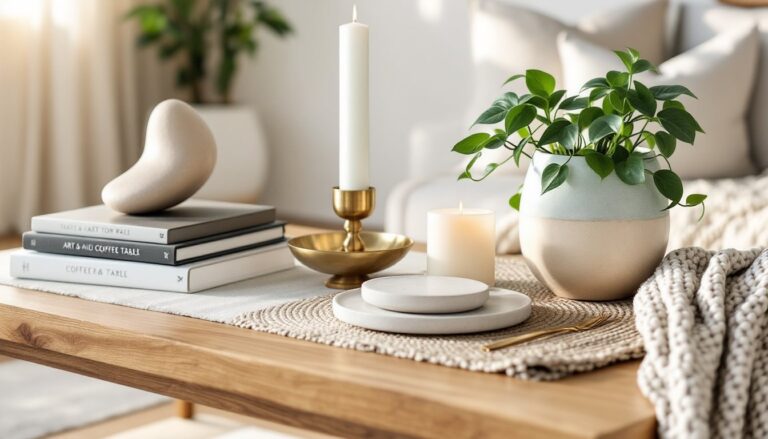
Another high-function option is a tiered stand or cake pedestal stacked with cookbooks spines-out, a small plant on top, and a candle at the base. This works especially well if your island lacks seating, it adds height variation and visual interest while keeping your favorite recipes accessible. Open shelving on or below the island offers similar potential: display matching plates, glass jars with dried pasta or grains, and a vase or two. Design-minded homeowners doing interior design research often find island styling inspiration in real homes that layer function with beauty.
A cheese board or cutting board displayed upright (in a wooden stand or leaning against a backsplash rail) adds rustic charm and signals that the island is a gathering hub. You can dress it with a candle, small potted herb, or vintage spoon. This approach works best on islands with at least 36 inches of clear counter space on one end.
Lighting and Statement Pieces
Lighting above your island should do more than illuminate, it should become part of the centerpiece story. Pendant lights hung 30–36 inches above the counter level serve as sculptural focal points. If you’re retrofitting, you’ll need to run electrical wire through the ceiling joists (check for load-bearing, and get a licensed electrician if joists are structural). Pendant styles range from sleek industrial to soft fabric drums. The right fixture draws the eye upward and down, framing your island as the main event. For a statement approach without electrical work, add flameless candles in brass or glass holders down the center line. LED candles eliminate fire risk in a busy kitchen and can be set on timers.
Beyond lighting, a large sculptural object, a brass vase, a decorative wooden box, or even a modern art piece, anchors the island as a gallery-style moment. Scale matters: if your island is 36 inches wide, a centerpiece should occupy 12–18 inches (roughly one-third of the space). Anything larger dominates: anything smaller gets lost. A statement mirror leaning against the backsplash above the island bounces light and makes the space feel larger. These cost $50–200 and require zero installation beyond sitting it safely against the wall. For islands viewed from multiple angles, rotate your centerpiece every season so the arrangement reads fresh from every vantage point.
Budget-Friendly DIY Centerpiece Projects
You don’t need a design budget to create an eye-catching island centerpiece. Start with items you already own: stack cookbooks, layer a tea towel over a cutting board, or group matching mugs and small bowls. Thrift stores and Facebook Marketplace often stock glass vases, brass candlesticks, and wooden boxes for $2–8 each. Build a custom centerpiece from these finds.
A water-filled glass vase with floating flowers costs under $10 to execute. Trim flower stems short (2–3 inches), float them on the water’s surface, and add a few green leaves. It reads elegant and takes three minutes to refresh. For a botanical DIY, propagate plant cuttings in small glass bottles, eucalyptus, basil, or coleus root beautifully in water. Line them up in a wooden tray for a garden-shop vibe at zero cost if you’re snipping from existing plants. Kitchen island design inspiration on design archives shows how professionals balance simplicity with impact.
DIY candle holders: roll kraft paper into a cone, secure with tape, and fill with sand and a tea light. Paint them white or natural. A set of three costs under $5 total and feels artisanal. For a metallic touch, spray-paint thrifted glass or wood pieces gold, copper, or matte black. Use outdoor spray paint (it adheres better to smooth surfaces) in a well-ventilated space or garage, and allow 24 hours curing time before handling. These micro-projects cost pennies and give your island a personalized, curated look that feels intentional rather than generic.
Conclusion
Your kitchen island centerpiece is an opportunity to show personality, create function, and anchor your kitchen’s visual narrative. Whether you choose fresh flowers, functional decor, or a DIY-built statement piece, the key is intentionality, pick something that reflects how you use the space and feels genuine to your home. Start simple, swap seasonally, and don’t overthink it. The best centerpiece is one that makes you smile when you walk into the kitchen and invites others to linger at the island. Give your island the focal point it deserves.